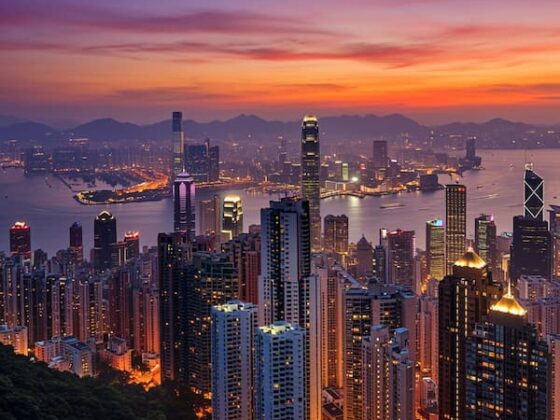


The global property market is undergoing a profound transformation. As high-net-worth individuals (HNWIs) and institutional investors seek stability and growth, traditional safe havens are being re-evaluated in the face of geopolitical tensions, sweeping tax reforms, and the prolonged stagnation of once-dominant markets. Amidst this global reshuffling, Hong Kong is experiencing a significant resurgence — particularly in its luxury property sector. Driven by decisive policy liberalisation, a robust legal framework, and its enduring status as a premier wealth management hub, Hong Kong is increasingly viewed as an attractive alternative to the stagnating mainland China market, the politically sensitive Middle East, and the tax-burdened prime markets of London.
From Trough to Recovery: Rebounding in the Property Market
The six-year correction ends
Hong Kong’s property market endured one of its most prolonged corrections in modern history, a downturn that began in late 2019 and was compounded by the social unrest of that year, the COVID-19 pandemic, and a sustained period of elevated global interest rates. By the end of 2024, residential prices had fallen by more than 25% from their 2021 peak. Yet the market has since staged a decisive recovery.
In 2025, total registered sales agreements for residential units, car parking spaces, and commercial and industrial properties increased 18.7% year-on-year to 80,700 transactions, while the aggregate transaction value rose 15.4% to HK$616.4 billion (approximately US$79 billion) — a four-year high, according to data from Centaline Property Agency. Home prices rose 3.25% in 2025, marking the first annual price increase in four years. December 2025 was the tenth consecutive month in which new home transactions exceeded 1,500 units, a trend not witnessed in more than 21 years.
JLL, in its December 2025 market outlook, confirmed that the housing market had achieved a “soft landing” in the second half of 2025, with the mass residential capital value index rising 1.4% in the first eleven months of the year. The firm forecasts mass residential prices to rise a further 5% in 2026. Morgan Stanley analysts, meanwhile, have projected a potential 10% or more residential price rebound, describing the market as not merely stabilising but “turning”.
Policy Catalysts: Abolition of Demanding Stamp Duties
The catalyst: abolition of cooling measures
The single most important policy catalyst for the recovery was the Hong Kong government’s decision on 28 February 2024 to abolish all demand-side management measures (DSMMs) for residential properties. This sweeping reform eliminated a suite of punitive stamp duties that had been in place for over a decade, including:
| Stamp Duty Abolished | Rate | Target |
| Buyer’s Stamp Duty (BSD) | 7.5% | Non-permanent residents and foreign buyers |
| New Residential Stamp Duty (NRSD) | 7.5% | Second-property purchases |
| Special Stamp Duty (SSD) | Up to 20% | Properties resold within 36 months |
| Higher Ad Valorem Stamp Duty | 15% | Corporate buyers and second-time buyers |
The immediate market response was emphatic. Mainland Chinese buyers surged into the market, and primary and secondary residential transactions strengthened notably from March 2024 onwards. The removal of the BSD was particularly significant for foreign buyers, who had previously faced a 7.5% surcharge simply for not holding permanent residency — a barrier that had no equivalent in most competing global markets.
It is worth noting that in February 2026, the government introduced a targeted recalibration: the ad valorem stamp duty rate for residential properties valued above HK$100 million was raised from 4.25% to 6.5%, effective retroactively from 26 February 2026. This measure is designed to moderate speculative activity at the very top of the market without reversing the broader liberalisation. Analysts have broadly concluded that this targeted increase is unlikely to deter the cash-rich mainland and international buyers who dominate the ultra-luxury segment.
Ultra-Luxury Growth: Institutional Wealth Strategies for Families
Rising to second in the world
The most striking dimension of Hong Kong’s recovery is the performance of its ultra-luxury residential market. According to Knight Frank’s global prime residential data, Hong Kong rose to second place globally for ultra-luxury home sales (properties valued at US$10 million or above) in the fourth quarter of 2025, trailing only Dubai.
Across the 12 global markets tracked by Knight Frank, 555 transactions of US$10 million-plus were recorded in Q4 2025, up 17% from the previous quarter, with total deal value climbing 20% to US$10.3 billion. Hong Kong’s contribution was 81 super-prime transactions worth a combined US$1.57 billion — a 45% increase in volume and 51% increase in value quarter-on-quarter.
For the full year 2025, Hong Kong recorded 232 ultra-luxury transactions, overtaking London, which slipped to fifth place with just 161 deals. This is a remarkable reversal of fortune for a market that had been largely absent from global luxury rankings for several years.
“The luxury residential market is expected to strengthen further, supported by improved sentiment, strong demand from cash-rich buyers and limited supply.” — William Lau, Senior Director, Head of Residential Agency, Knight Frank Hong Kong
Benchmark transactions and renewed appetite
Landmark deals have underscored the renewed appetite for trophy assets. A house at 39 Deep Water Bay Road changed hands for HK$319 million at the end of 2025, signalling that the ultra-high-end segment is once again attracting serious capital. Savills data confirms that mainland Chinese buyers have dominated this segment, accounting for 33 transactions above HK$300 million since 2024.
The primary market has been particularly active. New home sales in 2025 reached 20,564 units for a combined value of HK$225.6 billion, up 21.9% in volume and 8.2% in value year-on-year. The upward momentum has been primarily driven by the return of mainland buyers, who were especially active in primary market launches, often acquiring entire floors or multiple units in a single transaction.
The Family Office boom and Real Estate diversification
A central pillar of Hong Kong’s real estate resurgence is the explosive growth of its family office sector. As global wealth migrates toward Asia, Hong Kong has successfully positioned itself as the region’s premier wealth management hub, creating a captive and highly capitalised domestic buyer base for premium real estate.
Unprecedented Family Office growth
The scale of wealth concentration in Hong Kong has reached record levels. According to a market study commissioned by InvestHK and conducted by Deloitte, the number of single-family offices operating in Hong Kong surpassed 3,380 by the end of 2025 — a remarkable 25% increase over just two years. These offices inject an estimated HK$12.6 billion annually into the local economy through operating expenditures alone and directly employ over 10,000 professionals.
This growth is underpinned by Hong Kong’s broader success as a financial centre. The city reclaimed its position as the world’s top IPO venue in 2025, raising over HK$274 billion and recording a 226% year-on-year increase in IPO proceeds. The ultra-high-net-worth (UHNW) population (individuals with assets exceeding US$30 million) grew by 22.9% in the first half of 2025 alone, giving Hong Kong the second-highest UHNW population globally.
Real Estate as a core diversification strategy
For these family offices, real estate is not merely an alternative asset class; it is a foundational element of their wealth preservation and diversification strategies. According to the Knight Frank 150 survey of global family offices published in March 2025, direct real estate is the third most common allocation behind equities and cash. The survey found that 28% of family offices increased their real estate allocations over the past 18 months, targeting unleveraged returns averaging 13.8%.
In Hong Kong, this trend is highly visible. Family offices are actively expanding their local real estate holdings to hedge against global economic shifts and international market volatility. As noted by Thomas Chak, head of capital markets at Colliers Hong Kong, “Hong Kong’s property values remain appealing for investors seeking value” following the market correction, prompting wealthy investors to focus on stable local real assets to preserve capital.
The Knight Frank data indicates that family offices favour the following real estate sectors for current allocations:
- Offices (20%)
- Luxury Residential (17%)
- Industrial/Logistics (14%)
- Hotels (12%)
In Hong Kong, the conversion of underperforming hotels and commercial buildings into student accommodation has emerged as a particularly lucrative strategy for family offices, supported by recent government pilot schemes relaxing conversion rules. Furthermore, while residential property prices may still be recovering from their lows, rents have hit historical highs, providing the stable income generation that family offices require.
Tax concessions and regulatory incentives
The Hong Kong government has aggressively tailored its tax regime to attract family offices, creating direct benefits for their real estate and broader investment portfolios. The Family-owned Investment Holding Vehicles (FIHV) tax concession, enacted in 2023, provides a 0% concessionary tax rate on profits derived from qualifying transactions.
In the 2026 Budget, the government further enhanced this regime. Financial Secretary Paul Chan announced that tax incentives for single-family offices will be extended to cover holdings in gold, digital assets, and other specified commodities. This expansion allows wealthy families to transfer precious metals and crypto assets into their Hong Kong structures, helping them meet the minimum asset threshold of HK$240 million (approx. US$30 million) required for the tax concessions.
Additionally, the relaunched New Capital Investment Entrant Scheme (CIES) provides a direct pathway for wealthy individuals to obtain Hong Kong residency through investment. In September 2025, the government lowered the residential property threshold under the scheme from HK$50 million to HK$30 million, allowing up to HK$10 million of residential real estate to count toward the qualifying investment amount.
Structural Advantages for Foreign Buyers
Beyond the family office ecosystem, Hong Kong offers a set of fundamental structural and legal advantages that distinguish it from virtually every other major global real estate market.
A Uniquely Favourable Tax Regime
Hong Kong maintains one of the most competitive tax environments in the world for real estate investors. The key advantages are as follows:
| Tax Category | Hong Kong | United Kingdom | Mainland China |
| Capital Gains Tax | None | Up to 28% on residential | Applicable (20%+) |
| Inheritance / Estate Tax | None (abolished 2006) | 40% above threshold | Applicable |
| Stamp Duty for Foreign Buyers | 0% (post-Feb 2024) | 2% surcharge for non-residents | Restricted market |
| Property Tax | 15% on net rental income | Up to 45% income tax | Applicable |
| Corporate Tax | 16.5% maximum | 25% | 25% |
The absence of capital gains tax is particularly significant for investors seeking to acquire, hold, and eventually exit Hong Kong property without suffering the tax drag that diminishes returns in markets such as the United Kingdom, Australia, and most of continental Europe.
Open Market Access and Legal Certainty
Unlike Singapore, which imposes a 60% Additional Buyer’s Stamp Duty (ABSD) on foreign purchasers, Hong Kong imposes no nationality or residency restrictions on property ownership. Foreigners can purchase real estate with the same rights as permanent residents, subject only to the standard ad valorem stamp duty.
Perhaps the most enduring advantage Hong Kong offers is its common law legal system. Inherited from British administration and preserved under the “one country, two systems” framework, Hong Kong’s legal infrastructure provides secure property titles, enforceable contracts, and an independent judiciary. This legal certainty is a fundamental differentiator from mainland China, where property rights remain subject to state intervention.
The global context — why alternatives are losing their lustre
Mainland China: a market in structural stagnation
The contrast between Hong Kong’s resurgence and mainland China’s property crisis could not be more pronounced. China’s real estate sector is in its fifth consecutive year of decline. Key indicators — sales volumes, prices, construction starts, and completions — continue to deteriorate simultaneously, while an estimated 80 million unsold or vacant homes clog the market.
The scale of the collapse is staggering. In 2025, property investment in China dropped 17.2% year-on-year, while home sales by floor area fell 8.7%. China’s new-home sales area and value in 2025 fell approximately 50% from their 2021 peaks. New home prices fell 2.7% on an annual basis in December 2025, the steepest decline in five months.
For mainland Chinese HNWIs, this environment has fundamentally altered the calculus of wealth preservation. Real estate, which once constituted the primary store of value for Chinese households, has become a source of anxiety rather than security. The natural response is to seek offshore alternatives, and Hong Kong — with its cultural familiarity, legal protections, and proximity — is the most logical destination. Indeed, mainland Chinese buyers accounted for approximately 25% of Hong Kong home sales in the third quarter of 2025.
The Middle East: geopolitical risk comes to the fore
Dubai has been the undisputed star of global luxury real estate in recent years, topping global ultra-luxury rankings in 2025 with a record 500 transactions for the year. However, the market’s vulnerability to geopolitical shocks has been exposed by recent regional conflicts.
Iranian missile strikes on airports, ports, and residential areas in both Dubai and Abu Dhabi have unsettled investors and cast uncertainty over a market that has thrived on the perception of stability. The structural risks are compounding the geopolitical ones. Off-plan deals accounted for 65% of Dubai transactions in 2025, meaning a large portion of purchases involve homes not yet built — a pipeline that is acutely vulnerable if overseas investor sentiment deteriorates.
Hong Kong, by contrast, benefits from its position outside the arc of direct military conflict, and its status as a Special Administrative Region of China provides a degree of geopolitical insulation that few other markets can offer.
London: the non-dom exodus and political instability
London has long been the default destination for global elite property investment. Yet the city’s prime property market is experiencing a structural deterioration driven by aggressive tax reforms.
The UK Labour government’s abolition of the “non-domicile” (non-dom) tax status, effective April 2025, has triggered a significant wealth exodus. Under the new regime, former non-doms face a 40% inheritance tax on their global assets after 10 years of UK residency. The scale of the departure has been substantial: over 10,800 millionaires left the UK in 2024–2025.
The consequences for London’s prime property market have been severe. Spending on London homes priced at £5 million or more fell 15% in the first nine months of 2025 compared to the same period in 2024. As a result, London slipped to seventh place globally for ultra-luxury transactions in Q4 2025. As London penalises foreign wealth, Hong Kong’s welcoming tax environment becomes increasingly compelling.
Final thoughts
The resurgence of Hong Kong’s real estate market is not merely a cyclical rebound from a period of correction. It reflects a deeper structural realignment of global capital flows. The explosive growth of the family office sector — now numbering over 3,380 single-family offices — has created a sophisticated, highly capitalised domestic base that views Hong Kong real estate as a critical diversification and wealth preservation tool.
Against the backdrop of mainland China’s prolonged property crisis, the geopolitical vulnerabilities of the Middle East, and London’s self-inflicted tax-driven wealth exodus, Hong Kong’s proposition is increasingly compelling. For the discerning international investor and family office, the territory offers a rare combination of attributes: no capital gains tax, no inheritance tax, expanded tax concessions covering digital assets and gold, open market access for foreign buyers, and a world-class common law legal system.
The data for 2025 and early 2026 confirm that global capital has already begun to recognise this opportunity. The question for sophisticated investors is not whether Hong Kong deserves a place in a diversified real estate portfolio, but how significant that allocation should be.
Hugill & Ip has extensive experience in dealing with Real Estate and Conveyancing issues – so kindly get in touch to find out how our solicitors can help.
This article is for information purposes only. Its contents do not constitute legal advice and readers should not regard this article as a substitute for detailed advice in individual instances.