

Building Bridges Through Design
A conversation with Giovanna Imbimbo who leads Area-17’s predominantly female Hong Kong studio, discussing cross-cultural design innovation, work-life balance, and creating inclusive spaces for modern professionals.
As part of our ongoing Bridges to Empowerment initiative, Hugill & Ip is dedicated to highlighting the stories of remarkable women who are redefining leadership and driving positive change across various industries in Hong Kong and beyond. This month, we turn our spotlight to the world of architecture and design, a field where vision, resilience, and collaboration intersect to shape the spaces we inhabit.
We sat down with Giovanna Imbimbo, an accomplished architect and co-founder of the Hong Kong office of Area-17, an international architecture and interior design firm with a global footprint. Fifteen years ago, alongside her partner in life and work, Paolo Giannelli, Giovanna made the bold decision to establish Area-17’s presence in Asia. Today, their Sheung Wan studio is a thriving creative hub, uniquely characterised by an almost entirely female team.
In this feature, Giovanna shares her journey of building a cross-cultural design practice, the strength of female leadership, the delicate balance between professional ambition and personal wellbeing, and the creative process behind designing Hugill & Ip’s very own culturally diverse and inclusive new office space.
Q1. Giovanna, thank you for joining our Bridges to Empowerment series. To start, could you take us back to the beginning? What inspired you and Paolo to establish the Area-17 office in Hong Kong fifteen years ago, and how has that initial “global dream” evolved over time?
Thank you for having me. It’s an honour to be part of such a meaningful initiative. The story of Area-17 really began as a shared vision among a close-knit network of friends in Italy who were passionate about architecture and design. We wanted to create something that transcended borders.
Fifteen years ago, Paolo and I saw the immense potential and vibrant energy of Asia. We decided to take a leap of faith, choosing to stay in Hong Kong to anchor Area-17’s presence here. We wanted to build a bridge between the rich design heritage of Italy and the fast-paced, forward-looking dynamism of Asia. Setting up our studio in Sheung Wan felt right — it’s a neighbourhood that perfectly encapsulates that blend of tradition and modernity. Over the years, what started as a bold experiment has matured into a solid, highly creative reality. We have learned to adapt deeply to the local culture and market while maintaining our core Italian identity. It’s been a journey of constant learning and evolution, transforming a dream born of friendship into an international practice.
Q2. One of the most striking aspects of Area-17 Hong Kong is your team composition. Out of eighteen people, twelve are women, making it a predominantly female studio. Was this a deliberate choice, and how does this dynamic influence the creative and operational environment of the firm?
It wasn’t necessarily a strictly engineered quota from day one, but rather a natural evolution that reflects the incredible female talent in our industry. While NCARB data shows women make up about 27% of licensed architects globally, we have always prioritised hiring individuals who bring passion, meticulousness, and a collaborative spirit to the table, and it just so happens that many of these exceptional professionals are women.
Having a predominantly female team fundamentally shapes our studio’s culture. There is a profound sense of cohesion and mutual support. Our Managing Director, Joanne, brilliantly navigates the complexities of our projects, while Helen, our Project Manager, brings resoluteness and precision. Carmen handles the financial and material research aspects with incredible skill. Our architects, Antonella, Marta, and Camila, along with our interior designers Alessia, July, Peggy, and Joline, all bring a unique blend of accuracy and fresh creativity. And of course, Venezia, our administrative assistant, is the glue that holds our daily operations together.
This dynamic fosters an environment where multitasking is second nature, and where empathy and efficiency go hand in hand. We communicate openly, support one another through challenges, and celebrate our collective successes. It brings a very nurturing yet highly driven energy to our creative process.
Q3. The architecture and design industry can be notoriously demanding, often requiring long hours and intense dedication. How does Area-17 approach the concept of work-life balance, and why is this particularly important in a female-led environment?
The traditional architectural model has often glorified burnout, but we fundamentally disagree with that approach. At Area-17, our strength lies in our ability to integrate work and private life harmoniously. We believe that you cannot produce exceptional, thoughtful design if you are exhausted or disconnected from your personal life.
The women in our studio are incredibly efficient and cohesive. Because we communicate so well and manage our time rigorously, we ensure that every project is executed down to the smallest detail without sacrificing our personal needs. We recognise that our team members have lives, families, and passions outside the studio. Our goal is not just professional fulfilment, but holistic human fulfilment. When people feel valued and have the space to recharge, they bring much more creativity and resilience to their work. This balance is a cornerstone of our female leadership model — proving that you don’t have to choose between a thriving career and a fulfilling personal life.
Q4. Your work requires a constant dialogue between your offices in Florence, Beijing, Shanghai, and Hong Kong. How do you manage this cross-cultural collaboration, and how does the intersection of “East and West” manifest in your design philosophy?
The dialogue between our offices is the lifeblood of Area-17. It is a daily practice of continuous exchanges, video calls, and seamless teamwork that genuinely knows no boundaries. Rather than seeing geographical distance as a hurdle, we view it as our greatest asset.
Our design philosophy is rooted in this very intersection. We bring Italian precision, craftsmanship, and a deep appreciation for history and aesthetics. When you fuse that with the incredible energy, technological innovation, and scale of the Asian market, magic happens. Our team in Hong Kong, for instance, maintains a constant dialogue with our Italian counterparts. The creativity that our team brings is instrumental, ensuring that the executive details reflect both our European heritage and the specific needs of our Asian clients. It’s a synthesis where East and West don’t just coexist; they elevate one another, resulting in projects that are culturally nuanced, unique, and highly innovative.
Q5. The Bridges to Empowerment initiative focuses heavily on mentorship and building supportive networks. How do you approach mentorship within Area-17, especially when it comes to nurturing the next generation of female architects and designers?
Mentorship is absolutely vital. I look back at my own career and recognise how crucial support and guidance were in helping me navigate this industry. At Area-17, mentorship isn’t just a formal program; it is embedded in our daily interactions.
We encourage a culture where knowledge is shared freely. Our senior team members actively mentor our younger designers, guiding them not only in technical skills but also in client management, problem-solving, and building confidence. We want every woman who walks through our doors to find her space to shine. It’s about creating an environment where it is safe to ask questions, make mistakes, and learn. By fostering this supportive network, we are building resilience. We want our younger colleagues to know that they have a strong, capable community standing behind them, empowering them to take risks and push the boundaries of their creativity.
Q6. Female leadership is often described as being more empathetic and collaborative. From your experience leading an international firm, what do you believe are the most critical qualities of effective female leadership today?
I believe the most critical qualities are resilience, empathy, and the ability to foster genuine collaboration. Effective leadership is no longer about a top-down, authoritarian approach; it is about listening, understanding the diverse strengths of your team, and empowering them to do their best work.
In our studio, leadership means being deeply involved yet trusting your team implicitly. It’s about having the vision to steer the ship while being empathetic enough to understand the individual challenges your team members might be facing. It is also about adaptability. The world is changing rapidly, and the ability to pivot, to be resilient in the face of setbacks, and to lead with both your head and your heart is what sets truly impactful leaders apart. The reality of Area-17 demonstrates that when passion meets resilience, and when humanity is valued as highly as efficiency, you can build a truly successful international reality. Similar to what discussed in The Rise of Women in Senior Positions in Law Firms, the value that female leaders bring to the table is immense and transformative across all professional sectors.
Q7. Let’s talk about a project that is very close to our hearts — the design of Hugill & Ip offices. Law firms have traditionally leaned towards very conservative, formal spaces. How did you approach designing a space for a modern legal practice that is so culturally diverse, inclusive, and where the female component is so prominent?
Working on the Hugill & Ip’s office project was an absolute pleasure and a deeply inspiring project for us. From our very first meetings, it was clear that Hugill & Ip is not your traditional law firm. You are a vibrant, culturally diverse, and highly inclusive team, with a very strong and prominent female presence. We wanted the physical space to be a direct reflection of that progressive ethos.
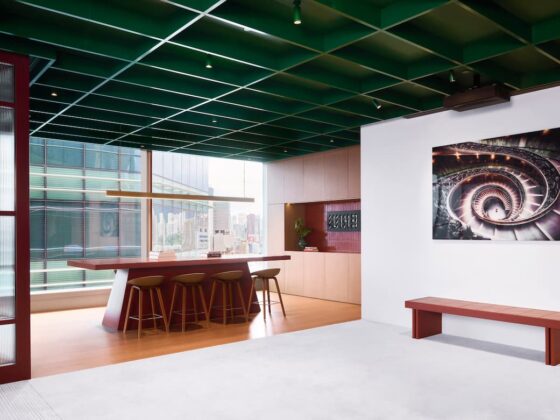
Our design concept moved away from the intimidating, dark-wood environments of the past. Instead, we focused on creating an inclusive office design that feels welcoming, transparent, and empowering. We utilised natural light, fluid layouts, and a warm, sophisticated material palette that speaks to professionalism but also to approachability and human connection. We designed collaborative areas that encourage interaction and the sharing of ideas, alongside private spaces that offer focus and confidentiality.
Knowing that diversity and female empowerment are core values of the firm, we wanted the environment to feel nurturing yet highly dynamic. It was about creating a “bridge” between the serious nature of legal work and the human, empathetic side of your practice. It was a true meeting of minds, and we are incredibly proud of the environment we created together.
Q8. Finally, Giovanna, as a successful entrepreneur and architect, what advice would you give to young women in Hong Kong who are aspiring to break into the design industry or start their own businesses?
My biggest piece of advice is to trust your vision and embrace your unique perspective. The design industry, like many others, can be challenging, but your individual background, your culture, and your experiences as a woman are your greatest assets.
Don’t be afraid to take up space and make your voice heard. Surround yourself with a supportive network — find mentors, collaborate with peers, and lift other women up as you climb. Understand that setbacks are part of the journey; resilience is what will carry you through. And most importantly, remember that you don’t have to sacrifice your humanity or your personal life to be successful. You can build a career that is demanding and excellent, while still being kind, empathetic, and balanced. Dream globally, act with precision, and always stay true to your passion.
To learn more about Hugill & Ip’s commitment to diversity, inclusion, and the empowerment of underrepresented communities, visit Hugill & Ip’s Bridges to Empowerment section.
For information purposes only. Its contents do not constitute legal advice and readers should not regard this as a substitute for detailed advice in individual instances.